


Composting Resources – Search Results
Return to Composting home page
Page 19 of 26
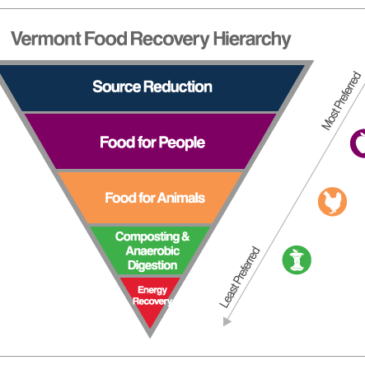
Vermont – Universal Recycling Law
With only one active landfill serving the entire state, Vermont is aggressively embarking on a first-of-its-kind, statewide parallel collection program of all mandated recyclable materials, including yard debris and food residuals. By taking a phased-in, all-in approach, by 2020 all of Vermont’s citizens will be required to divert food scraps and other organics from the landfill and all haulers and solid waste management facilities will be required to provide services for these materials.… Read More

Iowa – Composting Rules
Iowa’s regulations encourage on-farm, small-scale food scrap composting. The rules allow composters to accept up to two tons of food scraps from off-site per week without obtaining a solid waste permit. The composters must comply with specific site and operating requirements or their exempt status may be revoked. Facilities composting over two tons of food residuals and yard waste per week in any combination from off premises must obtain a permit and adhere to the solid waste composting requirements stipulated in state rules.… Read More
Washington’s “Soils for Salmon” – Compost Amended Soil
A nonprofit initiative, Soils for Salmon, came to transform state-level stormwater policy in the early 2000s. By advocating for the incorporation of compost use in land development practices, the program has helped Washington state to realize the many benefits of compost amended soil. The program specifically targets/drives landscapers, builders, developers, and citizens to use low impact development practices, which reduce stormwater runoff and pollution, while limiting water usage demands. … Read More
San Francisco, CA – Composting Rules
The City of San Francisco has some of the most progressive recycling regulations in the country. These regulations were further strengthened in June 2009 when the Board of Supervisors passed an ordinance requiring all city residents to separate food scraps, recyclable material, and trash into three separate curbside containers (blue for recycling, black for trash, and green for composting). Starting in 2011 the City will be able to impose fines on those who do not effectively separate these materials. The fine will be $100 for small businesses and single occupancy homes and up to $1,000 for large businesses and multi-unit buildings. … Read More
Webinar: Crowdfunding for Community Composting




Learn more about best practices in crowdfunding for community composting!… Read More
Massachusetts – Commerical Organics Disposal Ban
Massachusetts has a problem: it is running out of landfill capacity and already has disposal fees higher than the national average. Accordingly, in 2013, Massachusetts planned to reduce the quantity of waste disposed by 30% in 2020, and by 80% in 2050, from a 2008 baseline level. In working toward achieving this goal, they targeted food waste, resulting in a reduction of 180,000 tons of food waste per year between 2008 and 2018. … Read More
Massachusetts – Composting Rules
Since the early 1990s, Massachusetts has banned yard waste from disposal or incineration. To further facilitate diversion of organic waste from disposal, Massachusetts allows certain types of small-scale composting operations to be conditionally exempt from the requirement to obtain a site permit as long as specific performance standards are met. … Read More
Massachusetts – Composting Rules
Massachusetts allows certain types of composting operations to be conditionally exempt from the requirement to obtain a permit as long as specific performance standards are met. These operations include leaf composters who have less than 10,000 tons on-site at one time. Many other types of on-farm composting, including up to 20 cubic yards per day of vegetative scraps or 5 tons per day of food material, are permitted if a registration is submitted to the Massachusetts Department of Food and Agriculture and performance standards are met.… Read More
Minnesota – Composting Rules
Minnesota passed a law in 2009 that mandated all yard trimmings generated in the Twin Cities Metropolitan Area could not be collected in plastic bags as of January 2010. The intent of the law is to prevent non-biodegradable plastic from entering composting facilities. The compostable bag law was an amendment to the existing yard trimmings diversion law (stipulating that yard trimmings may not be sent to landfills and instead must be composted) that went into effect statewide in 1994. … Read More
Duke University – Compost Procurement
As part of fulfilling sustainability goals for campus landscaping, Duke University has included the purchase of compost in its guidelines for it university procurement office, thus creating an end-use market for local producers of compost.… Read More
West Virginia – Composting Rules
West Virginia addresses composting in a novel way: it categorizes acceptable farm and facility feedstock types more broadly than most states. West Virginia’s Yard Waste Composting Rule (33CSR3) prohibits yard waste from landfill dumping. … Read More
West Virginia – Composting Rules
West Virginia addresses composting in a novel way: it categorizes acceptable farm and facility feedstock types more broadly than most states. West Virginia’s Yard Waste Composting Rule (33CSR3) prohibits yard waste from landfill dumping. … Read More
Pennsylvania – Yard Trimming Disposal Ban
Pennsylvania, like many other states, has regulations that prohibit yard trimmings in landfills. Pennsylvania’s ban is less encompassing than many states, which ban yard trimmings in landfills regardless of their source of generation.… Read More
Pennsylvania – Small Scale and On-Farm Composting Permit
Pennsylvania’s source-separated composting general permit is available, allowing farmers and other small-scale operations to compost a number of nonhazardous municipal wastes. Approved uses for finished compost include marketing or distribution as soil substitute, soil conditioner, soil amendment, fertilizer, or mulch.… Read More
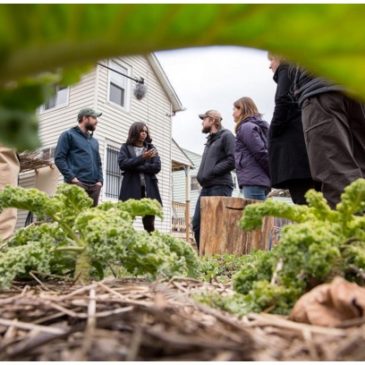
FLOTUS Tours ILSR Staff Member’s Backyard Garden

After visiting D.C.-area schools, Mrs. Obama visited the Institute for Local Self-Reliance’s Waste to Wealth initiative Project Manager Linda Bilsens at her home to laud the community garden they have cultivated in their yard.… Read More