
Composting Resources – Search Results
Return to Composting home page
Page 23 of 26
Internships Available – Jobs and Styrofoam Research

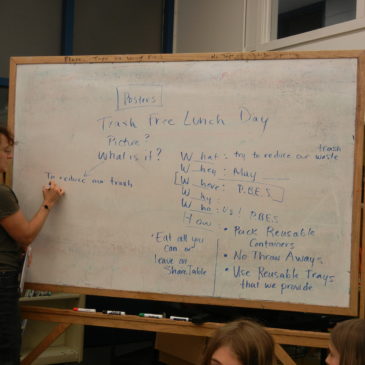
ILSR’s Waste to Wealth Program has openings for qualified college and university students or graduates for summer or academic year internships to research the economic and watershed benefits of composting and to assist with its no-styrofoam campaign.… Read More
Exemptions/Exclusions Added to Atlanta Airport Info Packet




The Sustainable Food Court Initiative (SFCI) Airport Pilot, Hartsfield-Jackson Atlanta International Airport, works closely with the SFCI Team to bring sustainable operating practices to their operations, especially regarding food waste. In early 2012 the Atlanta Airport made a bold statement in the new concessionaire contract, the largest foodservice contract executed in North America. … Read More
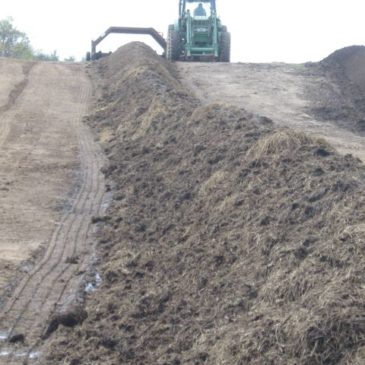
Supportive Rules For Small-Scale Composting

Composting is inherently local; it supports local green jobs, farmers and other businesses. Indeed, farmers have a vital role to play in producing and utilizing compost to restore depleted soils. They also have land, a necessary factor for developing the capacity to compost. State permitting rules can facilitate on-farm and other small-scale operators, thus helping to … Read More
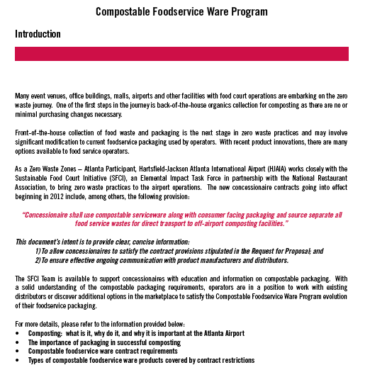
Atlanta Airport Launches Compostable Foodservice Ware Packet

Hartsfield-Jackson Atlanta International Airport (HJAIA) sends more than 19,000 tons of waste to Georgia landfills each year. Food scraps are the single largest component of HJAIA waste, making up about one-third of this tonnage. HJAIA has a goal to divert 50% of its waste from landfill disposal by 2015. Composting food waste is essential to reach this goal, and switching to compostable food packaging will enable successful food residuals recovery.… Read More
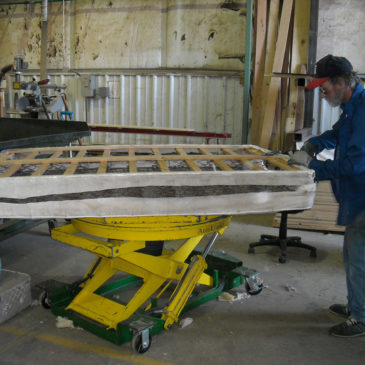
How Self-Reliant Cities Use Raw Materials

The recycling movement is yielding excellent results throughout the United States. In a range of innovative new ways, local governments are connecting the dots between resource conservation, sustainability, and local economic development. They are saving money, increasing local self-reliance, creating local jobs, and strengthening their local economies through recycling, reuse, composting and local food initiatives. Read on for success stories from communities across the country, and how you can follow their lead.… Read More
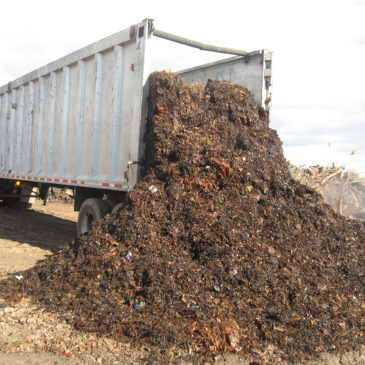
Stop Repeal of Michigan’s Yard Trim Ban

Michigan HB 4265 and HB 4266 would seriously weaken the state’s longstanding ban on landfill disposal of segregated yard trimmings by exempting landfills with gas recovery systems. These “Grass-to-Gas” bills were passed by the MI House of Representatives 67-40, March 15th, and are now before the MI Senate Committee on Energy & Technology. MICHIGAN RESIDENTS: CLICK … Read More
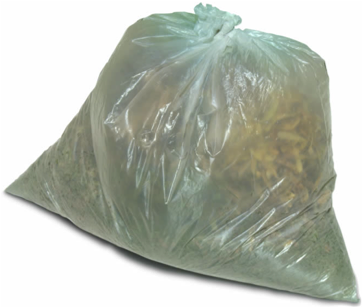
Compostable Plastic Bags: A Glance of What’s Packed in the Bag

Compostable plastic bags are increasingly used to collect food scraps for composting. Their main benefit? Removing the “ick factor” associated with collecting food residuals by keeping collection containers clean and odors at bay, while also breaking down at the composting site. Unfortunately, many plastic bag makers claim that their products are “biodegradable” or environmentally preferable in … Read More
Compostable Plastics 101: Overview & Issues

This presentation covers the basics of compostable plastics: what they are (and are not), where they are being successfully used, key challenges such as identification and labeling, and certification and standards. Presentation at the 2nd Annual Composting Plastics Symposium US Composting Council Conference & Trade Show January 21, 2012 Austin, Texas
Recycling and Deconstruction Resource Links

These links are useful to anyone interested in advancing composting, recycling or deconstruction.… Read More
Food Scraps Composting Training at Rodale Institute

ILSR and Rodale Institute joined forces to provide a one-day training program for existing and potential compost practitioners and policy makers. The program included both classroom sessions and field tours presenting issues related to food scraps generation, hauling, and composting practices to inform participants about all aspects of starting and running a successful food composting operation.… Read More

ILSR Talks about Composting on NPR’s Kojo Nnamdi Show

Farmers and home gardeners have always known about the benefits of composting: converting left over food scraps and plant waste into nutrient-rich fertilizer. But a group of activists and social entrepreneurs says this ancient practice could also transform our urban and suburban environments, helping cut down on waste and strengthen urban agriculture. We explore the science … Read More
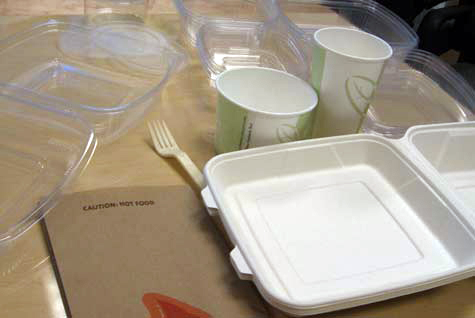
Why Consider Compostable Food Service Products?

ILSR’s new fact sheet on “FAQs: Why Choose Compostable Products for Food Service” explains what constitutes compostable products, where they are available, and the importance of working with local composters to ensure they are composted.… Read More

Partnership Update: Elemental Impact: A POWERful Voice in Organics Solutions

Elemental Impact (EI), a national non-profit based in Atlanta, is a dynamo of projects, ideas and networking for the corporate community and government agencies in the field of organics solutions. EI takes ACTION through the Zero Waste Zones, an EI program in partnership with the National Restaurant Association, the Sustainable Food Court Initiative and POWER – Perishable Organics Waste to … Read More
Compostable Biobased Food Service Ware

This presentation on Compostable Biobased Food Service Ware was part of the Responsible Purchasing Network’s webinar, May 12, 2011. The webinar was geared to experienced “green” purchasers and those just getting started and covered important aspects of a successful food service ware program from an environmental purchasing perspective, and explained how to conduct product performance testing. … Read More
Compostable Biobased Alternatives to Polystyrene in Food Service

Presented at CleanMed Session on Environmentally Preferred Purchasing (EPP): “Hot” Topics Phoenix, Arizona April 8, 2011 This presentation examines the problems with polystyrene-based food service ware and explores the potential benefits of compostable ware.