
Composting Resources – Search Results
Return to Composting home page
Page 24 of 26
Policies to Promote Composting

Presented at the US Composting Council Conference in Santa Clara, California
Organics Recovery & Biobased Materials: Opportunities for Corporate Involvement

Presented at POWER meeting Santa Clara, California US Composting Council Conference & Trade Show January 24, 2011 This presentation outlines the benefits of composting and the role of compostable biobased products in helping to recover food scraps and move toward zero waste economies.
BioSpecs for Food Service Ware




The Bio Specs for Food Service Ware outline sustainability criteria and recognition levels for food service ware made from compostable biobased materials. They provide a framework that enables buyers to assess the sustainability of these products during three stages of their life cycle: (1) biomass production, (2) manufacturing, and (3) end of product life. “Sustainability” encompasses … Read More
Composting 101

Presented to the National Park Service, National Capital Region Sustainability Advisory Group in Washington, DC
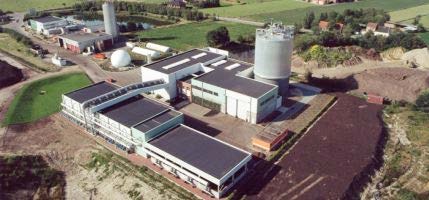
Update on Anaerobic Digester Projects Using Food Wastes in North America

Prepared for the City of Atlanta, this report on anaerobic digesters (AD) around North examines several existing AD projects that have a history of operational success and profiles some of the projects that are close to coming online.… Read More
Report on Model State Composting Policies

Composting is an important strategy for recycling organic materials that might otherwise be disposed in landfills or incinerators. This April 2010 report, Summary of Select State Composting Regulations, identifies 11 states with notable regulations governing compost facilities. … Read More
Policies to Promote Composting

Presented at the Alison Ferguson Foundation’s Trash Summit in Washington, DC
BioSpecs Purchasing Specifications for Compostable Biobased Food Service Ware

The Sustainable Biomaterials Collaborative (SBC) provides purchasing specifications for buyers of compostable food service ware. These specifications were designed to find products that are sustainable from cradle-to-cradle, including biomass production, manufacturing, and recovery. The specifications require that products meet certain standards and hold certain certifications of products to prevent purchasers from buying “greenwashed” items, which fail … Read More
Guidelines for Sustainable Bioplastics

The SBC’s Guidelines for Sustainable Bioplastics proposes goals and a roadmap for improving the sustainability of bioplastics – defined for this document as plastics in which 100% of the carbon is derived from renewable agricultural and forestry resources. While these Guidelines focus on biobased plastic replacements for fossil-fuel-based plastics, many of the principles apply to other … Read More
Zero Waste Planning Information and Resources

Twenty-five years ago, many solid waste planners thought no more than 15% to 20% of the municipal waste stream could be recycled. Today numerous communities have surpassed 50% recycling, and many individual establishments — public and private sector — such as office buildings, schools, hospitals, restaurants, and supermarkets have approached 90% and higher levels. A handful of … Read More
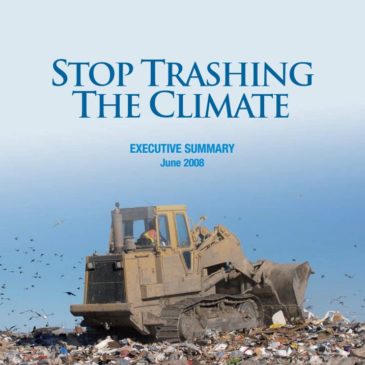
Stop Trashing the Climate

Released to coincide with the UN’s World Environment Day on June 5th, 2008, this report documents the link between climate change and unsustainable patterns of consumption and wasting. The study dispels myths about the climate benefits of landfill gas recovery and waste incineration, outlines policies needed to effect change, and offers a roadmap to significantly reduce … Read More
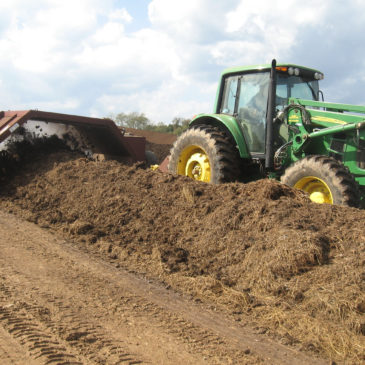
Recycling and Composting Policy Agenda Drafted; Comments Sought

Twenty-three veteran recycling and composting activists met in a two-day retreat in June 2007 to prepare policy guidelines to accelerate diversion of discarded materials from landfills and incinerators. The document, upon refinement and approval by a broader number of activists, will be circulated among state, local and federal decision-makers for consideration. View the background statement, draft … Read More
Resource Management in the State of Delaware

ILSR’s 2007 Report to the Delaware State Department of Natural Resources and Environmental Control (DNREC) presents an approach for changing solid waste management to resource management in this small Mid-Atlantic state. ILSR recommends a surcharge to finance infrastructure development for the public and private sectors. The $6 per ton surcharge would raise $20 million in 6 … Read More
Waste to Wealth – 2007 Annual Report

For 33 years ILSR’s “Waste to Wealth” program has helped to convert wastes from environmental and economic liabilities into valuable resources that contribute to community development. In 2007, our work has focused on the following: encouraging sustainable biomaterials to replace fossil-fuel-based plastics developing green industrial parks salvaging building materials through deconstruction deterring waste incineration projects and … Read More
Resource Management in the State of Delaware

ILSR’s 2007 Report to the Delaware State Department of Natural Resources and Environmental Control (DNREC) presents an approach for changing solid waste management to resource management in this small Mid-Atlantic state. ILSR recommends a surcharge to finance infrastructure development for the public and private sectors. The $6 per ton surcharge would raise $20 million in 6 … Read More